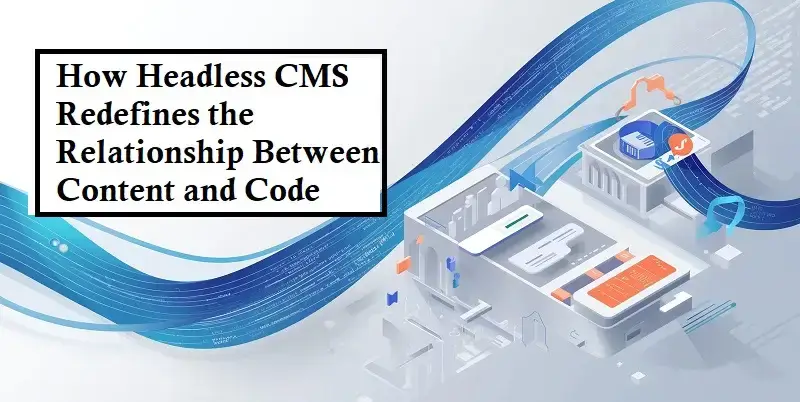
How Headless CMS Redefines the Relationship Between Content and Code
in Technology on February 9, 2026It’s never been more clear how digital teams create, manage and publish content. And at the center of this change is headless CMS. Where traditional CMS systems publish content in sync with platform templates and closely aligned codebases, the headless system does just the opposite. This shift perfectly demonstrates How Headless CMS Redefines the Relationship Between Content and Code, as development for how a digital experience is built becomes one thing and publishing for a content-based, UX experience is something else entirely. This new architecture extends the relationship between developers and content teams through divestiture and separate-but-equal ability to manage systems. This article will review how headless CMS challenges traditional notions of content as part of the creation process and how it gives organizations the opportunity to develop faster, publish on more platforms and create systems that are ready for whatever the future holds.
Separation of Content and Presentation Creates Flexible Opportunities
Traditional CMS forced content and code into one rigid system, meaning that developers had to adhere to what was possible on the back end while editors relied upon front-end templates. This integrated system slowed creativity and fast-moving innovation and made it challenging to adapt to newly emerging channels or revamped experiences. Why choose Storyblok for your CMS becomes clear in this context, as headless CMS champions the opposite approach by totally severing the connection between back end and front end. Content is an API-deliverable, flexible structure, while developers can create whatever they want as a front end from any framework or technology. Now teams can create at their own pace without slowing down because they have to rely on what’s already established in the back end. This equity of access means creativity is no longer stifled by behind-the-scenes systems.
Total Developer Control Over The Front End Experience
Headless CMS give developers unparalleled freedom when building front ends since they won’t be beholden to a CMS that requires certain templates or structuring. Instead, developers can create from scratch without worrying about pixel-perfect realism. They can use popular frameworks like React, Next.js, Vue, Nuxt, Svelte, or even entirely custom frameworks. They can determine performance/SEO/accessibility/device interactions without fear of breaking the content repository. Developers can focus on a JAMstack approach, microservices, multi-layered offerings that are fast and secure and ensure their code produces an ultra-dynamic and secure experience. Headless CMS allow for deliverable content in any form as dictated by the developer’s code.
Structured Reusable Content Models For All Teams
While developers receive ultimate freedom from constrained approaches, content teams benefit through headless CMS with uniform interactive strategies. For example, instead of formatting a title with boldness or specifying layout adjustments, editors have clean fields in reusable models through structured content. This means that content is consistent, easily updatable and infinitely adaptable. One piece of content can serve websites, apps, digital signage, smart devices and whatever else in 2035 without needing to rewrite or duplicate for different uses. Content teams no longer have to go to developers for minor layout revisions or content changes since their systems operate logically. Reduced operational friction is accomplished through what was once considered a joint team approach but is now streamlined to be more beneficial for content creators but easier for developers to create effectively.
Enabling a True Omnichannel Delivery System with API-First Architecture
With users interacting with brands across dozens of potential touchpoints, headless CMS allows content to be channel agnostic by default. APIs transfer structured content across any given interface – website, mobile device, smartwatch, voice assistant, in-store kiosk, or even something not yet invented. With a traditional CMS, access to content across touchpoints would require recreating and reworking assets intended for other platforms. Headless CMS changes that relationship: instead of making content for one product, it’s available as a common tool across any digital offering. The developer’s job changes to playing the role of experience facilitator while editors continue to manage the messaging and authoring from a single interface. Therefore, omnichannel is not just possible – but easy.
Lowering Technical Debt by Decoupling Lifecycles of Content from Code
One of the most advantageous benefits of headless CMS that no one talks about is how it avoids technical debt. In monolithic applications, when there are changes to design or an update is needed in redeveloping the front-end, it challenges the back-end – and team members must spend time migrating components to avoid breaking anything. With headless, there’s a decoupling of code – that which is necessary for front-end systems evolves separately. Developers can rebuild an entire front-end experience, change frameworks and even transition hosting systems without touching any piece of content. Content remains stable, preserved for the long-haul with no risk of antiquation by front-end reimaginings and renovations. This creates sustainable longevity, decreased maintenance costs and improved work for teams to create without fear of jeopardizing content systems.
Facilitating Collaboration Between Developers and Content Teams
Collaboration fundamentally changes between developers and content teams with headless CMS thanks to reduced dependency for completed projects. Developers no longer need to create templates or fix formatting issues for editors to work in; editors no longer need to hold off publishing until the front-end changes are developed. By separating these responsibilities, parallel workflows are encouraged – while developers explore performance and technical aspects, editors can prepare and polish their work ahead of time. Since both parties can operate separately but utilize a common structure without loss in access or shareability, communication becomes more strategic and less transactional. The result is better collaboration that benefits speed of production and reduces friction between all things digital endeavors.
Empowering Continuous Deployment and Incremental Releases
Teams working in a digital-first world rely on constant deployment, iterative practices and rapid testing. The reliance on a traditional CMS architecture could inhibit this due to a tightly coupled back end and potentially risky deployments. With Headless CMS, developers are empowered to make front-end changes and deployments without compromising live content or interactive publishing experiences. By decoupling content release from development, organizations can encourage rapid prototyping, A/B testing and incremental development – key components of the most successful, high-performing teams. Releases become predictable, downtime occurs less frequently, and shifts in the market or user engagement become easily actionable. The headless approach is very much in line with DevOps culture today.
Enable Personalization with Modularized Content
Personalization requires flexible, small bursts of content, which traditional enterprise-grade CMS can rarely provide. Headless CMS makes personalization far more accessible due to the disaggregation of content into smaller, modularized blocks that can be moved around, filtered or dynamically injected into different experiences. Developers can implement personalization engines that request variations of content through APIs based on user journey patterns, language preference, geo-location or device usage. At the same time, content admins can work within structured models to control personalized assets to ensure consistency and scalability. With headless CMS, personalization is both possible and efficient – as content and code become a sort of symbiotic system working in real-time to serve end users.
Future-Proofing Organizations With Architectural Flexibility
The least tangible yet most futuristic benefit of headless CMS is how it prepares a content ecosystem for technologies that don’t yet exist. As digital experiences become more common in augmented reality spaces, virtual realities, smart spaces and AI-enabled interfaces, a wholistic system is critical. Headless architecture exists in a place that’s ready for the future – delivered through APIs without visuals, meaning the content exists in its own realm without any concern for how it’s layered on top of another experience. Developers can play around with future presentation layers without concern of changing the content itself. Such flexibility secures organizational viability as technology moves rapidly into the future.
The Future of Content and Code Collaboration is Headless CMS and Multichannel Distribution
The transition to headless CMS represents a new era of digital strategy; teams will no longer be confined to a one-size-fits-all, monolithic solution. Instead, they’ll operate on more organized architecture with united goals and separate workflows that enhance creativity and technical savvy for both content and code. When the relationship between the two is redefined, organizations can capitalize on speedier production and smarter builds, bringing richer omnichannel experiences to market sooner. A headless CMS is not just a replacement; it’s an evolution in thought that allows for more scalable, future-proof ecosystems that adjust to any challenge thrown their way.
It Removes Template Imprisonment and Design Lag
The unfortunate part of an enterprise CMS is that many teams often share templates or theme-based layouts that create templates from which they cannot deviate until the next redesign comes along. A headless CMS eliminates the need for templated design altogether since the front-end design is entirely decoupled from the back-end experience. Thus, designers can approach builds with entirely new layouts, visual systems, or even modern UI frameworks to explore, and the content will not be disrupted. Instead, it’s a charge to enhance creative expression with less friction. Headless CMS offers easier access to things like animations or component-based design systems as no steps need to be taken behind the scenes to make those aesthetic preferences happen. Now they can just happen.
It Supports Governance as the Content Model Provides Natural Boundaries
With strict content models come naturally defined governance parameters in a headless CMS. Front-end developers build to spec without any editor intruding over their territory. An editor will never misstyle content due to limited access; thus, editorial roles become much easier since specific fields guide consistency rather than allowing free reign to deviate from a brand’s tone of voice. Instead of governance gaps that can impede larger brands or even compliance requirements, these natural boundaries empower digital growth with secured coding behind the scenes to ensure accessibility, loading speed, and brand equity across channels. For enterprise organizations operating with plenty of international teams, volume, and various regional and administrative needs, predictable governance is key.
Composable Digital Architectures Simplified with Headless Foundations
As organizations seek composable digital ecosystems, headless CMS become the connective tissue for all other best-of-breed tools. Gone are the days that content needs must be met by one platform (likely a monolithic behemoth that does everything – and nothing well). Instead, they receive more nuanced services for search, e-commerce, analytics, personalization, automation, and more, and content passes through those services as structured data instead of being trapped within whatever output a “forward-facing” template needs. Because these services derive from the connective tissue of APIs, composability facilitates teams building out nuanced offerings as necessary, leveraging the best service for the best job, and parting ways with outdated services without rebuilding from scratch across the digital ecosystem. No longer is content an afterthought but instead the connective tissue facilitating a more flexible and future-proofed framework.
Improved User Experiences through Performance-Driven Development
Fast, reliable and accessible experiences are a necessity for everyone in today’s world. With headless CMS, developers can create the front-end based on their modern frameworks and hosting standards which makes performance far more achievable. Teams can play with static site generation and server-side rendering options from within the CMS itself; they can also leverage edge delivery and caching solutions that stem from lightweight API requests that better fit their specific needs. The result is lower load times, better Core Web Vitals, enhanced experiences and improved rankings on search engines and digital marketplaces alike. Performance is no longer a second thought based on combining content and code for a potential resolution; it becomes a major factor in architectural considerations from the very start.
Related Blog Post


Popular Blog Post


Featured Products