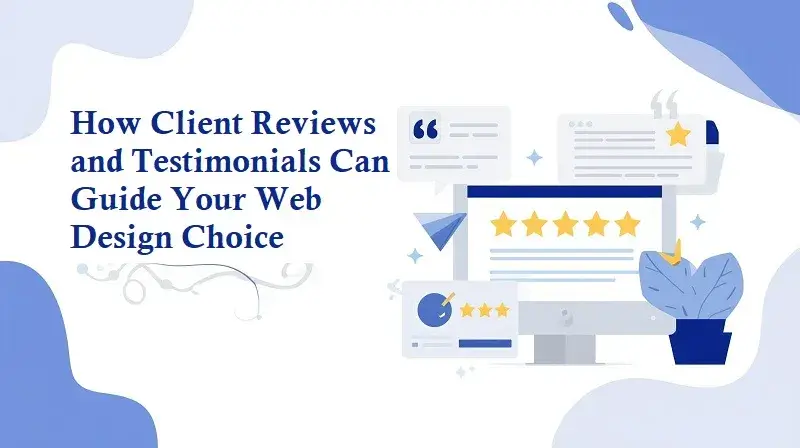
How Client Reviews and Testimonials Can Guide Your Web Design Choice
in Web Design on January 23, 2026In the crowded marketplace of website design companies, where promises of stunning visuals and flawless functionality abound, client reviews and testimonials emerge as one of the most reliable compasses for decision-making. These authentic voices from past clients cut through marketing hype to reveal the true nature of an agency’s performance, reliability, and ability to deliver results. In 2026, with digital trust more fragile than ever and buyers increasingly skeptical of polished sales pitches, understanding how client reviews and testimonials can guide your web design choice has become essential for avoiding costly mismatches and identifying partners that genuinely drive business growth.
Statistics underscore this reality: a significant majority of consumers trust online reviews as much as personal recommendations, and positive testimonials can dramatically influence purchasing decisions. For high-stakes investments like custom website development—often ranging from thousands to six figures—ignoring client experiences risks project delays, scope creep, communication breakdowns, or subpar outcomes. This detailed guide explores how to strategically use reviews and testimonials to inform your choice of website design companies, from sourcing credible feedback to interpreting patterns, spotting genuine insights, and avoiding common pitfalls.
The Power of Social Proof in Selecting Website Design Companies
Client testimonials and reviews serve as powerful social proof, providing unfiltered evidence of an agency’s track record. Unlike self-promoted case studies or portfolio pieces, third-party feedback highlights real-world collaboration dynamics, adherence to timelines, responsiveness to feedback, and post-launch support quality.
Positive reviews frequently emphasize consistent themes: exceptional communication that keeps clients informed at every stage, creative solutions that solve specific business challenges, technical expertise that ensures fast-loading, secure, and scalable sites, and measurable results such as increased leads, higher conversion rates, or improved search rankings. When multiple clients across industries echo these strengths, it builds confidence that the agency can replicate success for your project.
Conversely, a lack of reviews—or an abundance of vague, generic praise – can signal inexperience, inconsistent delivery, or reluctance to showcase transparency. In an era where 90%+ of buyers research online before committing, agencies with robust, verifiable feedback stand out as lower-risk choices.
Where to Find Credible Client Reviews and Testimonials
To gather meaningful insights, focus on independent, verified platforms rather than agency websites alone, where testimonials may be selectively curated.
- Clutch.co — Widely regarded as a leading B2B review site for web design and development, Clutch verifies reviews through direct client interviews, providing detailed insights into project budgets, timelines, team communication, and outcomes. Look for agencies with dozens of reviews and consistently high ratings (4.8+ stars).
- GoodFirms — Offers curated lists with verified client feedback, hourly rates, and service breakdowns, making it easier to compare website design companies side-by-side.
- Google Reviews and LinkedIn — Provide broader sentiment and real-time opinions; check for response patterns to negative feedback, as proactive engagement demonstrates professionalism.
- Industry-Specific Directories — Sites like DesignRush or UpCity often feature niche-focused reviews.
Cross-reference multiple sources to spot consistencies or discrepancies. Agencies proud of their work actively encourage reviews on these platforms and provide reference contacts upon request.
Key Elements to Analyze in Reviews and Testimonials
Effective evaluation goes beyond star ratings—dive into the substance of feedback:
- Specificity and Detail — Authentic testimonials mention concrete aspects like “They integrated our CRM seamlessly, resulting in 40% more qualified leads” or “The team handled three rounds of revisions without extra charges.” Vague comments like “Great work!” carry less weight.
- Relevance to Your Needs — Prioritize reviews from clients in similar industries, company sizes, or with comparable project scopes (e.g., e-commerce platforms, B2B lead-gen sites, or complex custom applications).
- Patterns Over Time — Examine recent reviews (2024–2026) to ensure the agency maintains quality amid growth or staff changes. Consistent praise for reliability signals stability.
- Balance of Positive and Constructive Feedback — A few resolved negative reviews demonstrate accountability; agencies that respond thoughtfully to criticism often excel in client service.
- Quantifiable Results — Look for mentions of metrics—traffic growth, conversion improvements, reduced bounce rates, or SEO gains—as these indicate a results-oriented approach.
When possible, request direct conversations with past clients to ask targeted questions: How was the agency’s handling of unexpected challenges? Did they stay within budget? Would you hire them again?
Red Flags in Reviews That Signal Potential Issues
Not all feedback is equal—certain warning signs in testimonials or review patterns merit caution:
- Overly generic or repetitive phrasing across multiple reviews, which may indicate fabricated content.
- Absence of detailed, third-party verified reviews despite prominent self-published testimonials.
- Patterns of complaints about poor communication, missed deadlines, hidden fees, or inadequate post-launch support.
- Agencies that deflect or ignore negative feedback rather than addressing it professionally.
- Lack of recent reviews, suggesting stagnation or declining service quality.
If reviews raise doubts, trust your instincts and explore alternatives—plenty of reputable website design companies boast transparent, positive track records.
Integrating Reviews into Your Overall Decision Framework
Client feedback should complement—not replace—other evaluation steps like portfolio analysis, technical assessments, and proposal comparisons. Use it to validate claims: Does the agency’s stated expertise match client experiences? Do they consistently exceed expectations in areas critical to your project?
Create a simple scoring system: Assign points for review volume, average rating, specificity, relevance, and patterns in results-oriented comments. Combine this with assessments of portfolios, processes, and cultural fit to narrow your shortlist.
Why Reviews Matter More in 2026’s Digital Landscape
With AI-generated content flooding online spaces and deepfake concerns rising, human-verified client experiences provide rare authenticity. Platforms like Clutch continue to refine verification processes, making trusted reviews even more valuable. Businesses that prioritize feedback-driven choices often secure partners who communicate transparently, adapt to needs, and deliver lasting value—ultimately leading to websites that perform as strategic assets rather than mere digital brochures.
Conclusion: Let Real Client Voices Light the Way
Client reviews and testimonials offer an indispensable lens for navigating the world of website design companies. By seeking out detailed, verified feedback on reputable platforms, analyzing patterns for authenticity and relevance, and heeding both glowing praise and constructive critiques, you position yourself to select a partner that aligns with your vision and delivers tangible results.
Approach this step methodically: compile feedback from multiple sources, reach out for references when needed, and let genuine client stories guide your final choice—especially when evaluating transparency around content removal prices for clients. The right agency isn’t just skilled at design; it’s proven reliable through the experiences of those who’ve walked the path before you. Start reviewing today and build your next website with confidence and clarity.
Related Blog Post



Popular Blog Post



Featured Products