
SEO tools boost search visibility, while SEO web design helps ensure a website is structured with search performance in mind.
They offer data for:
- Keyword research
- Technical SEO
- Backlink analysis
- Rank tracking
- Competitor research
- Content optimization
In 2026, many SEO platforms exist. The best one depends on your website, goals, budget, and SEO experience. Below, we compare 10 popular SEO tools and explain what each one is best used for.
Here are the Top 10 Best-in-Class SEO Tools in 2026:
1. Moz Pro
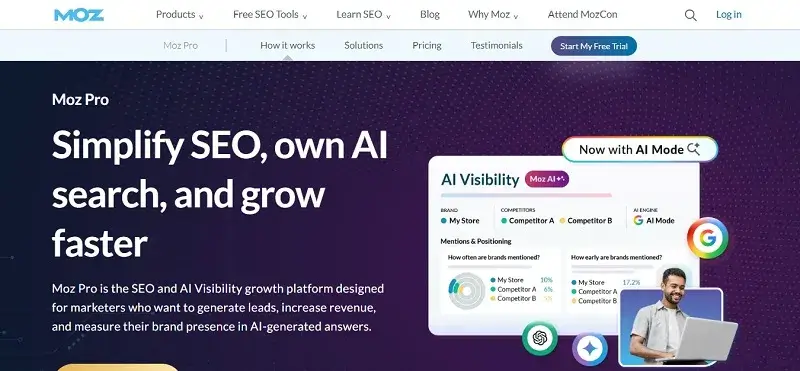
Moz Pro is a complete SEO software package meant to support all forms of optimization. It includes modules for keyword research, site audits, and rank tracking. This charming program offers great data analytics. It works well for both amateurs and experts.
Moz Pro simplifies optimization by providing advanced data insights and an easy-to-use interface. It helps you find ranking chances, fix site issues, and track how well you perform over time.
Key Features:
- Keyword Research
- Site Audits
- Rank Tracking
- On-Page Optimization
- Backlink Analysis
2. Ahrefs
Ahrefs is especially well-known for its backlink analysis. Users get insight into their website’s link profile. The tool supports more than just backlinks. It’s also great for keyword research, exploring content, and tracking rankings. These features help with complete SEO strategies.
Bloggers, digital marketers, and business owners use Ahrefs. They rely on it to grasp their SEO strategies and boost their search rankings. Now, let’s discover how this tool will boost your SEO strategy.
Key Features:
- Traffic Analysis
- Site Explorer
- Keyword Research
- Backlink Analysis
- Content Explorer
3. SEMrush
SEMrush is a versatile digital marketing tool. It helps with SEO, PPC, social media marketing, and content marketing. The competitive analysis feature lets users compare their performance with industry rivals. This helps them gain an advantage in their engagements.
Competitive research is one of its best features. It lets users see how they stack up against competitors in the same business and gain a strategic edge. This type of competitive research can also support local SEO strategies for businesses targeting specific geographic markets. SEMrush can help you stay ahead in the digital world, whether you run a business, blog, or sell something.
Key Features:
- SEO Tools & Keyword Research
- PPC & Advertising Insights
- Site Audit & Technical SEO
- Social Media Management
- Rank Tracking
4. Google Analytics
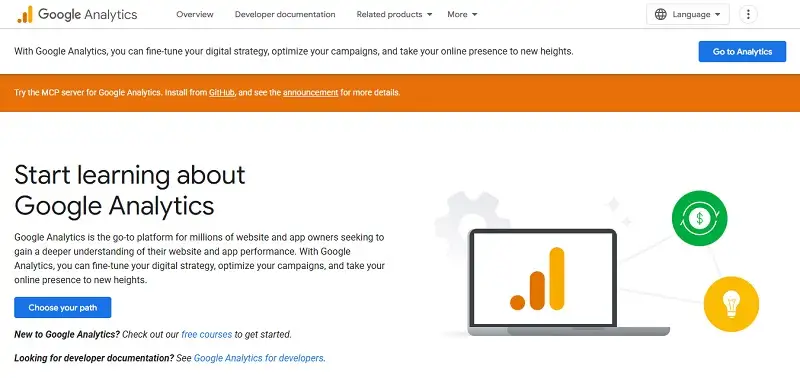
Google Analytics is an essential tool in the digital marketer’s toolbox. It offers a more robust view of website traffic and user behavior. Understanding user interactions with the site helps businesses enhance their experience and content.
Marketers can use Google Analytics to make smart choices. This tool enhances strategies, engages the right audience, and improves website speed, while image optimization can also help improve overall website performance.
Key Features:
- Real-Time Data Tracking
- Audience Insights
- Traffic Sources Analysis
- Conversion Tracking
- Custom Reports and Dashboards
Google Analytics vs Google Search Console: What’s the Difference?
Google Search Console helps website owners see how their site shows up in Google Search. It provides information on search queries, clicks, impressions, indexing, and any search-related issues. Google Analytics focuses more broadly on what users do after arriving at the website, which can provide useful insights for improving web design and user experience. SEO tools from Ahrefs and Semrush assist with competition, keywords, backlinks, and research.
5. Screaming Frog SEO Spider
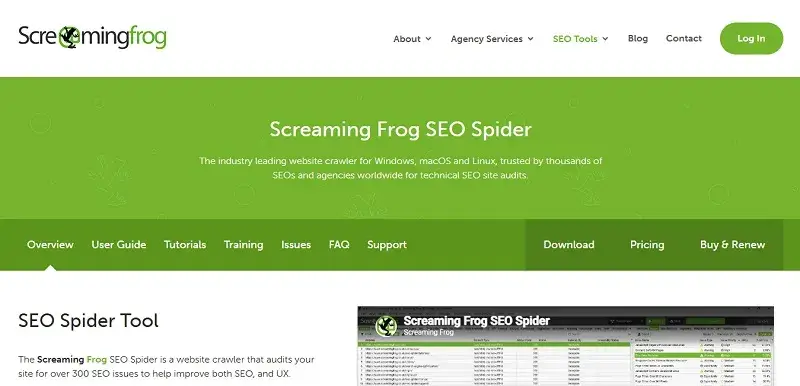
This desktop tool crawls websites to analyze technical SEO. Screaming Frog analyzes broken links, page titles, and metadata, which are also important when creating SEO-optimized web templates.
Real-time views help you spot and fix problems quickly. This keeps your website friendly for search engines.
Key Features:
- Website Crawling & Audit
- Metadata & On-Page SEO Analysis
- XML Sitemap Generation
- Duplicate Content Detection
- Redirects & URL Issues
6. Yoast SEO
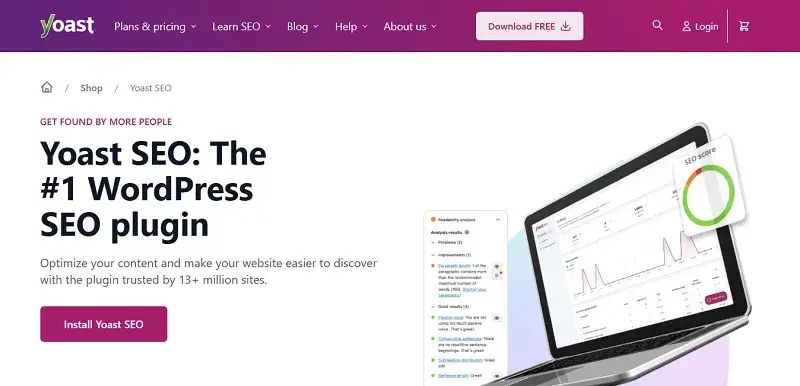
A solid SEO plugin for WordPress, Yoast SEO allows simple on-page optimization techniques. It offers real-time content analysis, readability checks, and XML sitemap creation. The plugin is easy to use. Even people new to SEO can boost their site’s performance.
Yoast SEO helps you boost your site’s visibility on search engines, like Google. Other WordPress image optimization plugins can also help improve website performance and SEO It’s user-friendly, so you can use it regardless of your content writing experience.
Key Features:
- Readability Check
- SEO Title & Meta Description Optimization
- Real-Time Content Analysis
- Schema Markup Integration
- Internal Linking Suggestions
7. Majestic
Majestic’s focus on backlinks has made it one of the largest link databases in the world. Its tools help users understand their site’s link profile. They measure backlink quality and discover new link-building opportunities.
Majestic boosts your site’s influence and search rankings. It does this by checking link quality.
Key Features:
- Largest Link Database
- Trust Flow & Citation Flow
- Site Explorer
- Backlink History Checker
- Bulk Backlink Analysis
8. Serpstat
Serpstat covers the entire SEO spectrum. It offers keyword research, website audits, and more. Its competitive analysis tool helps companies analyze competitors’ activities and change their tactics.
It helps businesses look at what their competitors are doing. Then, they can adjust their own tactics for better results. Serpstat gives you the info you need to stay ahead. This is useful for SEO, marketing, or business owners.
Key Features:
- Website Audit
- Rank Tracking
- Content Analysis
- API Access
- Team Collaboration
9. Ubersuggest
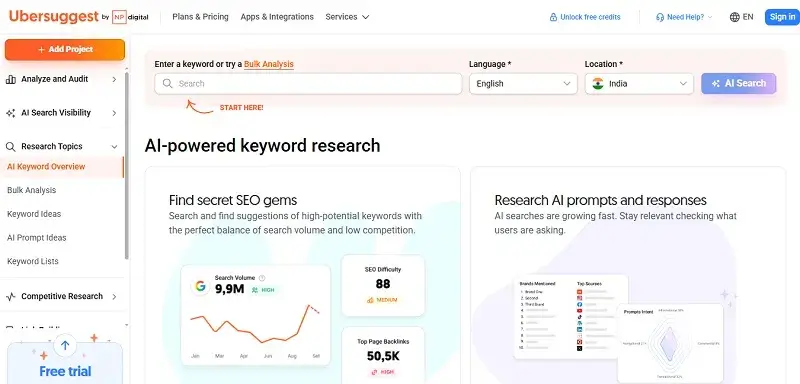
Ubersuggest is a handy tool made by Neil Patel. It gives you keyword ideas, content suggestions, and backlink information. This is great for small businesses and people seeking budget-friendly SEO options.
Ubersuggest offers great tips to boost your website’s visibility. It helps attract more visitors and keep you ahead of your competition. Best of all, you don’t need to spend much on paid SEO tools.
Key Features:
- Keyword Research & Suggestions
- Competitive Analysis
- Content Ideas & SEO Optimization
- Site Audit & SEO Health Check
- Rank Tracking & Performance Monitoring
10. BuzzSumo
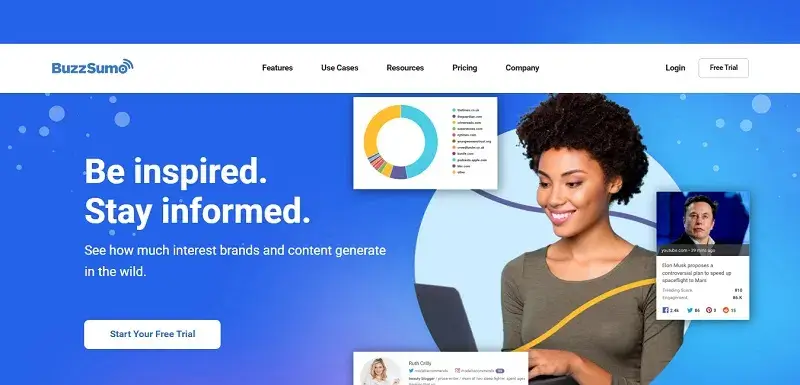
BuzzSumo focuses on content discovery. It also tracks how content performs on various media platforms. Marketers can create content strategies that match what their audiences like. By knowing what’s trending, they can appeal to desires effectively.
Marketers can make content plans that match their audience’s interests. They do this by tracking trends. This will increase connection and exposure. If you want to improve your content marketing, BuzzSumo can make a big difference.
Key Features:
- Content Discovery
- Social Media Performance Tracking
- Content Alerts
- Backlink Analysis
- Comprehensive Reports
Frequently Asked Questions About SEO Tools
1. What are the best SEO tools in 2026?
Some top SEO tools in 2026 include:
- Semrush
- Ahrefs
- Google Search Console
- Google Analytics
- Moz Pro
- Screaming Frog
- Ubersuggest
These tools help with:
- Keyword research
- Competitor analysis
- Backlink analysis
- Technical SEO
- Content optimization
- Web performance
The choice of SEO tools should be based on the specific needs of an SEO campaign.
2. Which SEO tool is best for keyword research?
Semrush and Ahrefs are top tools for keyword research. They offer keyword volumes, competition levels, trends, related keywords, and competitor insights. Voice search is another factor to consider when researching how users phrase queries. Google Keyword Planner is great for keyword research. It is especially useful if you’re new or on a tight budget.
3. Which SEO tool is best for backlink analysis?
Ahrefs is popular because of its great backlink analysis tools. With Ahrefs, you can discover backlinks, referring domains, and anchor text. You can also check broken links and link-building info from your competitors. Backlink analysis is also possible using Semrush. Comparing backlink data from various tools can help during an SEO campaign.
4. What is the best SEO tool for technical SEO?
One of the best SEO tools that can be used in a technical audit is Screaming Frog. It can find broken links, duplicate content, metadata problems, redirects, and more. There are also technical SEO auditing capabilities in Semrush and Ahrefs. Which tool is best for you will depend on your website.
5. What is the best SEO tool for beginners?
Google Search Console is a great SEO tool for beginners since it is free and gives useful data from Google. Beginners can track search performance, indexing, keywords, clicks, and website visibility with it. Other tools that can be useful for beginner SEOs include Ubersuggest and Semrush.
6. What is the best free SEO tool?
Google Search Console happens to be one of the most effective free SEO tools. It helps website owners track how well they show up in Google searches. They can see indexing, queries, clicks, impressions, and any technical issues. Google Analytics may also offer useful information about the website’s traffic. The free Google Keyword Planner tool may help in keyword research.
7. What is the difference between Ahrefs and Semrush?
Ahrefs and Semrush are both great SEO platforms, but they have some key differences. Ahrefs is great for backlink, keyword, and competitor analysis. Semrush provides tools for SEO, content marketing, PPC, and competition. Your decision should be based on your priorities.
8. How do I choose the right SEO tool for my business?
Choose an SEO tool based on your site size, goals, budget, skills, and features.
Think about whether you need the tool for:
- Keyword research
- Backlinking
- Technical audits
- Competitor analysis
- Content optimization
Begin with a free tool if you are a beginner in SEO, and later advance with time as your business grows.