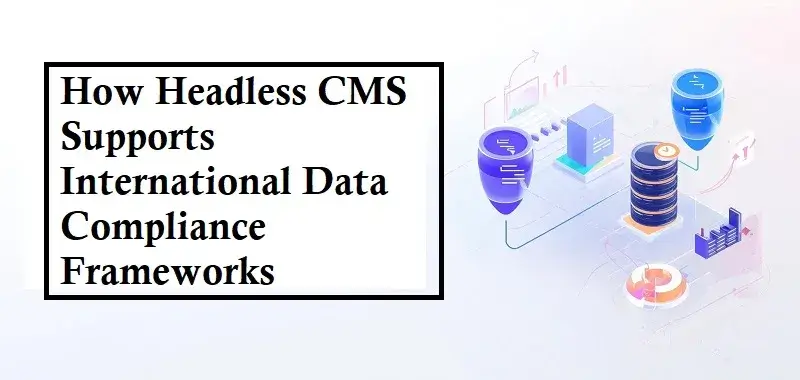
As global reach increases, so too must compliance with ever-developing data protections—this is exactly how headless CMS supports international data compliance frameworks in practice. Each country has different laws on data protection, privacy, and consumer rights. Whether it’s managing consent requests, cookie policies, or jurisdiction-based legal standards for data handling and residency, multinational organizations must ensure their global digital footprint remains compliant with constantly evolving expectations.
Monolithic systems often complicate this approach. Content, UI and backend development are so tightly integrated that creating something for one country based on its legal data requirements could mean redeveloping an entire workflow to accommodate. The headless CMS offers a better solution with decoupled content from user-engaged presentation and structured, API-based conveyance. Thus, systems can more easily reflect a scalable governed approach instead of relying on one huge system dependent upon international data compliance. This facilitates freedom of development by allowing new integrations while maintaining compliance for other regions.
A Decoupled Architecture Provides Compliance Agility
A headless CMS creates a decoupled content management and frontend experience, providing a more malleable approach to any regulations that require adaptation. This is especially true for multinational organizations; if new data protection regulations emerge somewhere, frontend facets (consent banners, privacy notices, user preference settings) can require updating on existing implementations, supported by Developer-friendly features of headless CMS that enable faster adjustments without disrupting the entire system.
Since the content layer exists independently and in a centralized manner, compliance updates are somewhat easier since they do not require an adjustment to the entire application. Instead, compliance teams only have to go so far as remediating privacy language in structured content fields, which will still be dynamically delivered via API integrations to regionally-affected frontends.
This reduces the operational burden. Instead of changing decentralized systems, compliance teams only focus on specific governance pieces within the decoupled architecture. Decoupled environments enable compliance to be assessed with greater focus since the working digital world remains largely unaffected.
Structured Content For Privacy and Consent Necessities
International data compliance frameworks differ from one another by a longshot. Consent requirements, disclosure requirements, and rights granted to end-users are highly variable between countries. The more digital properties an organization operates, the more manual entries will inevitably create inconsistency.
A headless CMS naturally supports structured content models which define common privacy notices, cookie policies, and consent messaging as reusable components. There can be variations per region, housed in fields defined for this purpose while still connected to the same content entity. Once a user accesses a digital property from a certain region, the appropriate version is delivered via dynamic rendering.
This is highly manageable from an oversight perspective. Compliance professionals can maintain standardized modules without sacrificing empowerment for localized versions where equity is emphasized. With consent rendered dynamically as part of the content experience, organizations need not duplicate entire digital efforts; they need to manage the privacy-relevant modules effectively.
Role-Based Access Controls for Governance Necessities
Yet compliance is only as good as the internal governance associated with who can access what, and the relative ability to change what needs to be changed regarding user data. Headless CMS’s decentralized components allow for greater granularity of role-based permission systems required for type-based governance frameworks.
Global administrators can establish permissions based upon compliance needs; legal teams may have the ability to edit privacy modules but regional editors would have access only to their localized content fields. Developers may have access to managed API integrations without jeopardizing compliance-related elements that would be off-limits due to sensitive governance requirements.
This brings accountability. Editors can be held accountable through audit trails for making changes to compliance language, and if appropriate permissions are aligned with governance policies, there’s less risk of unauthorized personnel making changes that can jeopardize compliance status.
Supporting data residency and localization demands
Certain locations have demands on where data can be stored or processed. A headless CMS does not inherently store personal information, but rather serves content, however its architecture enables it to facilitate compliant demands by supporting regionally specific hosted environments and back end services.
Because the front end applications can only receive content through APIs, organizations can create regionally supported infrastructures that comply with data residency requirements. Likewise, where consent logic, forms, and messaging are needed, these can be adjusted based on geographic location.
The fact that a headless CMS relies on separation of management and infrastructure means that businesses can grow into international territories yet accommodate technical configurations for regional compliance. Thus, headless architecture allows for compliance facilitation without sacrificing uniform treatment on a global scale.
Compliance injection into the content lifecycle
Compliance is not fixed; regulations change and organizational mandates must adjust accordingly. A headless CMS allows for compliance review to be integrated into the content lifecycle through necessary stages.
Updates can require review before publication if they’re related to a privacy update, cookie change, or user data implementation. Legal teams can be notified of approval stages through necessary revisions to facilitate compliance. Revisions can be compiled in versioning and created to show a history of changes.
This not only makes governance part of the process, but it also reinforces compliance as a valuable step rather than an informal review. When compliance is injected into the process, it means organizations have higher levels of reliability to ensure that compliance considerations are maintained across digital operations in multiple markets.
Consistent compliance messaging across omnichannel engagement points
There’s no longer a one-size-fits-all application of digital touch points; from websites to mobile applications to wearable tech, it’s important to ensure compliance messaging is consistent across all engagement points. Fragmented systems cause inconsistent language of consent receipt or disclosure notification.
A headless CMS enables this centralized dissemination of compliance-focused content across all relevant touch points. When privacy policies or other compliance-compliant language changes, it can update across the board.
This means operational duplication is reduced; instead of having to independently change each line of consent receipt across platforms, users see the same compliant messaging whether they’re on one device or another. Centralized oversight is much more manageable to ensure accurate and up-to-date information isn’t lost in translation through disjointed systems.
Elevate Compliance Transparency through Auditability and Versioning
Regulators want to know that organizations are transparent about handling consumer data and any necessary adjustments for compliance. For accountability, this means that changes to policy and approval sequences must be captured.
A headless CMS supports compliance with versioning and audit logs related to changes made to relevant content. Each modification of specific compliance assets timestamps and pairs that entry with a defined user role. Such detailed explanations meet audit expectations from regulators and internal requests alike.
Enhanced auditability adds enterprise-level confidence. When compliance foundations are transparent in versioning, organizations reduce their legal vulnerabilities and enhance stakeholder trust. The headless design promotes operational efficiency and compliance accountability.
Scale Compliance Frameworks for International Growth
As enterprises expand into new territories, compliance becomes more complicated. New privacy legislation, consumer protections, and digital governance must be mapped over and integrated into existing plans. When access levels are unscalable, compliance teams are overwhelmed by new challenges.
The headless architecture allows for easily scalable compliance options across borders. New regions can have privacy additions layered in, in structured content models, without disturbance to the globally compliant CMS. Approval workflows and permission hierarchies can naturally scale into new territories.
When expansive plans integrate compliance into their foundations, they grow in aligned governance instead of sporadic processes mushrooming everywhere. A headless system enables compliance with growth.
Automate Region-Specific Consent Experiences
When data compliance legislation is international, varying consent options apply depending on geographic implications. Specific countries require an explicit opt-in request regarding data tracking while others allow implied tracking with the offer to opt-out for those who choose not to participate. Overly manual management of these requests across digital landscapes is cumbersome, complicating accessibility and inadvertently exposing organizations to excessive risk.
A headless CMS maintains the ability to automate region-specific consent experiences through structured content and API logic. Consent banners, preference centers, and messaging disclosures can be stored as modular elements with geographic determinations. When a visitor enters a site, the front-end dynamically pulls the appropriate consent experience based on geography or regulatory requirements.
This consistency through automation reduces human error. For example, when consent systems shift, organizations can update their appeals through one portal without having to redesign user interfaces everywhere. Instead, organizations simply adjust structured modular values and maintain usability while achieving compliance quickly when new regulations must be met.
Strengthening Data Subject Rights with Centralized, Hybrid Content
International data compliance frameworks afford individuals rights right to access their information, right to request amendments, right to deletion, etc. Rights articulation is necessary for transparency and regulation compliance. However, balancing accurate, localized standards across markets can be difficult in conventional content systems.
A headless CMS allows international enterprises to secure data subject rights as structured content. Rights articulation, points of contact, timelines for requests, and legal citations can all be localized to an extent while still receiving a global policy framework. Since content is centralized, where necessary, updates regarding the user experience in rights acquisition can be internationalized as well.
Such systems facilitate user clarity and compliance team oversight. If anyone should be empowered to exercise data subject rights from any location, accountability and transparency necessitate that such information is available in all relevant jurisdictions.
API-Based Interoperability with Third-Party Compliance Solutions
Often, compliance is supported by third-party solutions in consent management, analytics, or data sharing/storage. When third-party compliance solutions are required for international stakeholders, it can complicate the compliance process as content systems must be aligned.
In a headless CMS architecture, API-based content systems allow for easy integration with third-party compliance solutions. Consent management systems, privacy dashboards, and analytics systems can dynamically share and integrate with modular, structured components of content. Where compliance-related messaging needs to change (or integrations), these can be done through the hub and captured seamlessly across globalized platforms.
This creates a singular experience without redundant possibilities. Instead of creating different integrations from scratch for each region, enterprise solutions offer one, standardized connection that incorporates local justification within international standards. Thus, compliance solutions are both easier for users and best for enterprise.
Future-Proofing Compliance Through Master Content Solutions
Compliance standards continually change; emerging digital laws, international data transfer protocols, foreign border restrictions, newly articulated consumer rights international enterprise requires flexibility. Static content structures deny updates and complicate operations.
A headless CMS supports adaptive content models that evolve based on regulatory necessity. New compliance sections, metadata fields, layered localization can all occur without breaking the system. Subcontent forms facilitate the review process to ensure updated additions make it through the ranks for proper finalization.
This future-proofs compliance models established. If content systems are centralized with oversight, organizations can quickly adapt based on need. When systems are rigid without acknowledged fluidity, organizations feel pressured to employ strict regulations they’re uncertain can truly hold up over time.
Conclusion
International regulatory data compliance frameworks require agility, structure, and transparency. A headless CMS facilitates this by separating content from presentation, modularly designed privacy components, integration into the compliance workflow, and a centralized governance interface.
With a modular approach, access via role-based permissions, omnichannel delivery for consistent publication, and end-to-end auditability, companies can reduce operational friction while adhering to compliance standards. With international regulations constantly changing, headless CMS solutions are the best option in ensuring continued compliance without stifling creativity.
Related Blog Post


Popular Blog Post



Featured Products